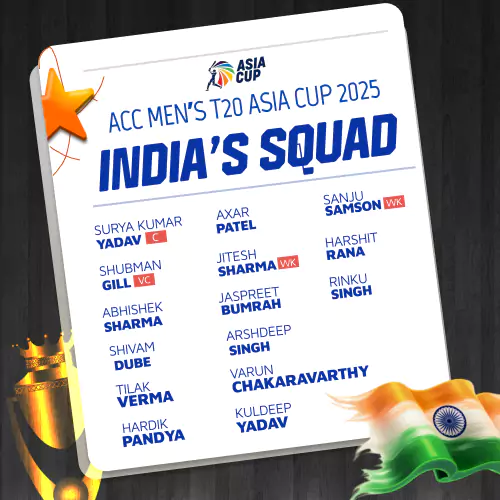
As the India Asia Cup 2025 unfolds in the UAE, cricket analysts and fans alike are examining India’s team composition and tactics with a critical eye. While India remains one of the most formidable teams in T20 cricket, there are areas of concern that could impact their performance in crucial matches. Chief among these are the death overs bowling strategy and the flexible batting order.
Understanding the implications of these weaknesses is essential for both fans and analysts. The India Asia Cup 2025 lineup has been carefully selected to balance experience, power, and adaptability, but the current strategies carry potential risks that opponents could exploit.
Death Overs Bowling: A Critical Vulnerability
One of the most closely scrutinized aspects of India’s strategy in the Asia Cup 2025 is the death overs bowling. In T20 cricket, the last five overs often decide the match, and teams rely heavily on specialist bowlers to contain runs and take wickets. India’s current setup relies on a combination of Jasprit Bumrah, Hardik Pandya, and Shivam Dube, with Bumrah often being used heavily during the Powerplay.
Reliance on Bumrah in Powerplay
Deploying Jasprit Bumrah early in the innings has its advantages, as it ensures India starts with a key wicket-taking bowler. However, this approach leaves the death overs heavily dependent on Hardik Pandya and Shivam Dube. While both are capable bowlers, they do not possess the same level of consistency and experience as a specialist death bowler like Arshdeep Singh.
Absence of Arshdeep Singh
Arshdeep Singh has consistently proven his ability to bowl tight death overs in the Indian Premier League (IPL). His left-arm pace, combined with excellent variations, often proves difficult for batsmen in the final overs. His absence in India’s squad creates a notable gap in the death bowling department, potentially giving strong batting lineups an advantage in crunch situations.
Hardik Pandya’s Effectiveness
Hardik Pandya has shown that he can take crucial wickets in death overs and can be effective under pressure. However, compared to Arshdeep Singh, Hardik’s economy rate and consistency at the death is slightly lower. This discrepancy could be significant in high-pressure Asia Cup matches where even a small lapse in death overs control can alter the outcome of a game.
Vulnerability Against Set Batsmen
The risk of this death overs setup is evident when India faces in-form, set batsmen. For example, Shaheen Afridi hit Hardik Pandya for consecutive sixes in the final over of a recent match, demonstrating how a well-set batter can exploit this gap. This scenario underlines the potential weakness in India’s bowling attack during the critical final overs of a match.
Batting Order: Flexibility vs. Consistency
Another area of potential concern is India’s batting order. The India Asia Cup 2025 strategy emphasizes flexibility from number 4 onwards, allowing players to adjust their roles depending on match situations and opposition bowling strategies. While adaptability is a strength, it also introduces certain risks.
Fixed Top Order
The opening pair and number three positions are reportedly fixed, ensuring stability at the start of the innings. Players like Shubman Gill, Abhishek Sharma, or other top-order batsmen provide a solid foundation. This fixed top order ensures India can start strongly in the powerplay overs.
Middle-Order Flexibility
From number 4 onwards, the batting order is flexible. Suryakumar Yadav, Sanju Samson, and Hardik Pandya may be rotated depending on the pitch conditions and match scenario. The intent is to allow batters to maximize impact on slow pitches in the UAE, which are likely to favor controlled stroke play over pure power hitting.
Risk of Insufficient Acceleration
While flexibility allows for tactical adaptability, it can lead to insufficient acceleration in the middle overs. If the middle order fails to build momentum or clear the boundary consistently, India may end up with below-par totals. This could especially affect matches against top-tier teams, where every run counts.
Strategic Adjustments
Coaching staff, including batting coach Sitanshu Kotak, are emphasizing the importance of reading the game and adjusting quickly. This flexible approach aims to optimize run-scoring while ensuring batters can respond to varying conditions. However, success depends heavily on the middle-order players executing their plans under pressure.
Balancing Death Overs and Batting Strategy
The interplay between India’s death overs and batting order creates a tactical balancing act. On one hand, the team wants to leverage Jasprit Bumrah’s wicket-taking ability in the early overs. On the other, the absence of a specialist death bowler like Arshdeep Singh makes the final overs potentially vulnerable.
Similarly, the flexible batting order allows players to adapt, but too much adjustment without a clear plan can disrupt momentum. For example, if the top-order fails and middle-order batters take too cautious an approach, India risks posting a total that is insufficient for defending.
Importance of Match Situations
This strategy emphasizes adaptability, but its effectiveness is highly situational. On slower UAE pitches, middle-order acceleration becomes crucial. In high-pressure matches against aggressive teams, the lack of a second death overs specialist can be a disadvantage.
Potential Solutions
Analysts suggest India could consider using part-time bowlers strategically in the death overs or adjusting Bumrah’s overs allocation to retain fresh options at the end. In batting, defining clear roles for middle-order batters while retaining some flexibility could mitigate the risk of underperformance.
Summary of India Asia Cup 2025 Weakness
In conclusion, the India Asia Cup 2025 campaign, while strong on paper, faces challenges in two key areas: death overs bowling and batting order flexibility.
- Death Overs Bowling Weakness:
- Heavy reliance on Jasprit Bumrah in the Powerplay.
- Absence of Arshdeep Singh as a specialist death bowler.
- Increased vulnerability against set, aggressive batsmen.
- Heavy reliance on Jasprit Bumrah in the Powerplay.
- Flexible Batting Order Risks:
- Middle-order adaptability may slow acceleration.
- Potential for below-par totals if boundary-hitting is inconsistent.
- Dependence on player adaptability on slow pitches.
- Middle-order adaptability may slow acceleration.
These weaknesses do not undermine India’s overall strength but highlight areas that could be exploited by strong opponents. How India manages these challenges in the remaining Asia Cup 2025 matches could be decisive in their journey toward the trophy.
FAQ: India Asia Cup 2025 Weakness
Q1: What are India’s main weaknesses in Asia Cup 2025?
A1: The main weaknesses are the death overs bowling, due to lack of a specialist bowler besides Bumrah, and a flexible batting order that may struggle to accelerate consistently.
Q2: Why is Arshdeep Singh not part of India’s death overs plan?
A2: Arshdeep Singh was not included in the squad, despite his proven skills in death overs, which limits India’s options in the final overs.
Q3: How does the flexible batting order affect India’s performance?
A3: It allows middle-order batters to adapt to match conditions but may risk insufficient scoring if acceleration is not maintained.
Q4: Which positions in India’s batting order are fixed?
A4: Only the opening pair and number three slot are fixed; the rest of the order is flexible.
Q5: Can India overcome these weaknesses in Asia Cup 2025?
A5: Success will depend on smart management of death overs, effective middle-order performance, and adaptability to UAE pitch conditions.